Your Ultimate Wedding Veil Guide: Styles, Lengths & Choosing Tips

Your Ultimate Wedding Veil Guide: Styles, Lengths & Choosing Tips
Choosing your wedding veil is one of those magical moments in bridal fashion, transforming your look from beautiful to breathtaking. It’s more than just an accessory; it’s a statement, a tradition, and a key element that ties your entire bridal ensemble together. But with so many options – from delicate birdcage veils to dramatic cathedral lengths – navigating the world of bridal headwear can feel overwhelming. This comprehensive wedding veil guide is here to demystify the choices, helping you understand the different styles, lengths, and how to perfectly match one to your dress and personal style. By the end, you'll feel confident in selecting the veil that completes your dream wedding day look.
Table of Contents
- Unveiling Popular Bridal Veil Types and Materials
- Decoding Wedding Veil Lengths and Their Impact
- Pairing Your Veil with Your Dress Silhouette
- Practical Tips for Choosing Your Perfect Wedding Veil
- Frequently Asked Questions
Unveiling Popular Bridal Veil Types and Materials
When you begin your search for the perfect veil, you'll quickly discover a rich tapestry of bridal veil types, each with its own unique charm and character. Understanding these variations is the first step in finding the one that speaks to your heart and complements your wedding gown. The material and style of your veil play a huge role in its overall feel, from ethereal and romantic to sleek and modern.
Classic Tulle and Illusion Netting
The most common material for wedding veils is tulle, a fine, often sheer netting that creates that classic, dreamy bridal look. It comes in various weights and stiffnesses, from soft, flowing English net to crisp, voluminous bridal illusion tulle. Illusion netting is often used for its delicate, almost invisible quality, allowing focus to remain on your dress while still providing that veil effect. These materials are incredibly versatile, suitable for almost any veil length or style, and can be easily embellished. Consider the drape and sheerness; a softer tulle will flow beautifully, while a stiffer one will hold more shape and volume.
Delicate Lace and Embellishments
For brides seeking a touch of intricate elegance, lace-edged veils are a timeless choice. Whether it's a delicate Chantilly lace trim, a bold Alençon lace appliqué, or a scattering of embroidered motifs, lace can elevate a simple veil into a work of art. Beyond lace, veils can be adorned with pearls, crystals, beads, or even subtle glitter, adding sparkle and dimension. When choosing an embellished veil, consider how it harmonizes with your dress's details. You want the veil to enhance, not compete with, your gown's beauty. A good rule of thumb is to match the embellishments to those on your dress, or opt for a simpler veil if your dress is heavily adorned. You can explore a wide range of wedding dress inspiration to see how different embellishments work together.
Unique Fabrics for Modern Brides
While tulle reigns supreme, modern bridal fashion embraces a wider array of materials for veils. Silk organza offers a slightly more structured, opaque look with a beautiful sheen, perfect for a contemporary, minimalist aesthetic. For a vintage or avant-garde touch, consider veils made from French netting, often seen in shorter styles like the birdcage veil, which we'll discuss further. These unique fabrics allow you to express your individual style and create a truly personalized bridal statement. Don't be afraid to experiment with different textures to find a veil that truly reflects your personality and the overall vibe of your wedding day.
Decoding Wedding Veil Lengths and Their Impact
The length of your wedding veil dramatically influences your bridal silhouette and the formality of your look. From playful short styles to breathtakingly long ones, each length offers a distinct aesthetic and functionality. Understanding these options is crucial for making an informed decision that complements your dress and venue.
Shorter Veils: Birdcage, Blusher, and Shoulder
Shorter veils are perfect for brides seeking a chic, vintage, or less traditional look. The birdcage veil, often made from French netting, typically covers just a portion of your face, adding an air of mystery and old-world glamour. It's fantastic for shorter dresses, pantsuits, or modern, minimalist gowns. A blusher veil is a single layer of tulle that covers your face during the ceremony, traditionally lifted by your partner, and can be worn with any length veil. Shoulder-length veils (around 20-22 inches) fall just to your shoulders, offering a subtle frame for your face and neckline without overpowering your dress's details. These styles are generally easy to wear and manage throughout your wedding day, making them excellent choices for outdoor or more casual celebrations.
Mid-Length Veils: Elbow, Fingertip, and Waltz
Mid-length veils strike a beautiful balance between drama and practicality. An elbow-length veil (around 25-30 inches) reaches your elbows, creating a lovely frame for your upper body and often ending just above the waistline of your dress. It's a versatile choice that suits many dress styles. Fingertip veils (around 36-40 inches) extend to your fingertips when your arms are relaxed at your sides. This is one of the most popular lengths, as it offers a graceful, flowing look without competing with your dress's train. Waltz or ballet veils (around 54-60 inches) fall between your knees and ankles. They offer the elegance of a longer veil without reaching the floor, making them ideal for dancing and movement, particularly if your dress doesn't have a long train. These veils are excellent for brides who want elegance and ease of movement.
Grand Veils: Floor, Chapel, and Cathedral
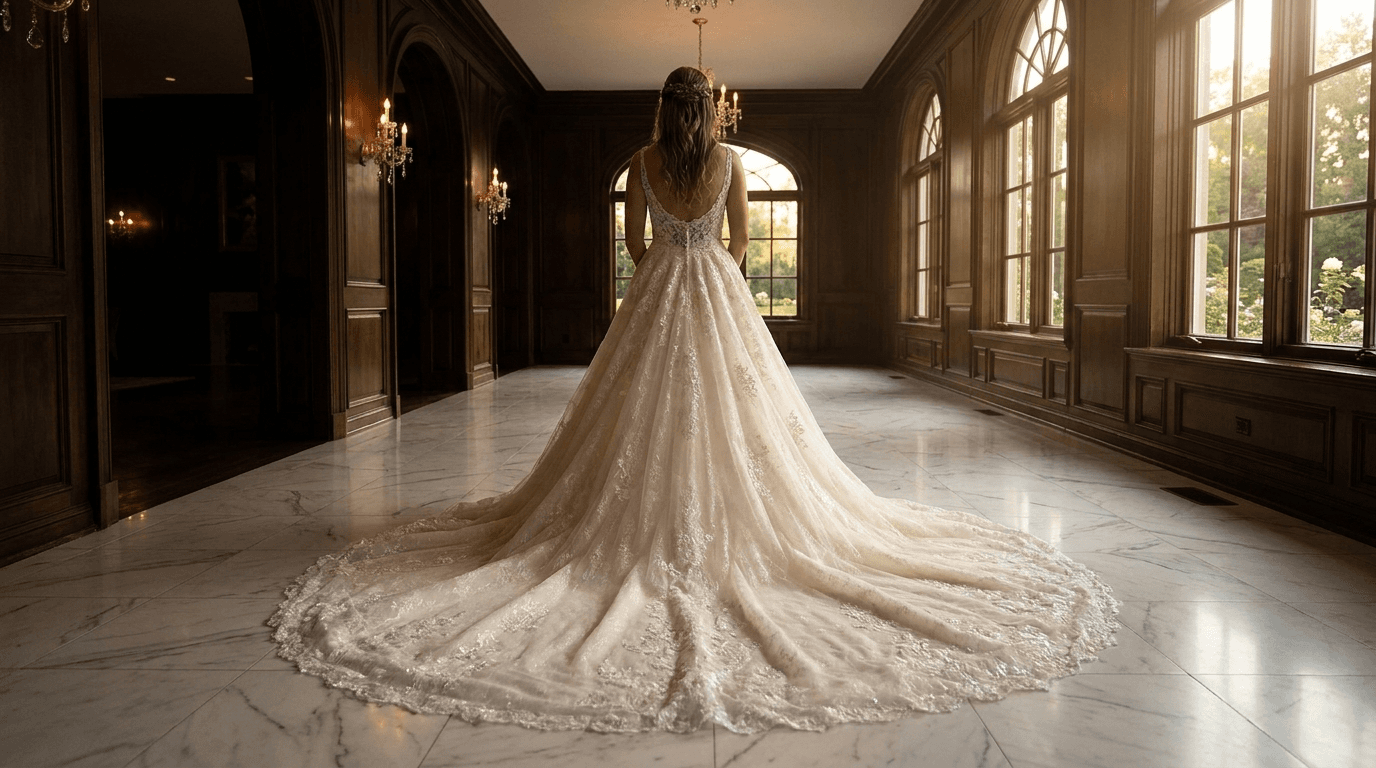
For the ultimate in bridal drama and tradition, grand veils are the answer. A floor-length veil (around 72 inches) skims the floor, matching the length of a floor-length gown without a train. Chapel veils (around 90 inches) extend slightly beyond your dress's train, creating a soft, trailing effect. The most majestic is the cathedral veil, typically 108-120 inches or even longer, extending far beyond your dress's train. This length creates an incredibly dramatic and regal entrance, perfect for formal ceremonies in grand venues like cathedrals or stately homes. While stunning, remember that longer veils require more careful handling. You might want to read our article on managing your wedding dress train all day for tips that apply to long veils too. The visual impact of a cathedral veil is undeniable, creating breathtaking photo opportunities and an unforgettable walk down the aisle.
Pairing Your Veil with Your Dress Silhouette
Your wedding veil should enhance, not overpower, your wedding dress. The key to a harmonious look lies in understanding how different veil styles and lengths interact with various dress silhouettes. This thoughtful pairing ensures your entire ensemble feels cohesive and breathtaking.
A-Line and Ball Gowns
A-line and ball gowns are classic, romantic silhouettes that pair beautifully with a variety of veils. For a traditional, fairytale look, a chapel or cathedral veil is a stunning choice, adding to the gown's grandeur and creating an ethereal cascade of fabric behind you. The sheer length complements the volume of the skirt without adding bulk. If you prefer a slightly less dramatic but still elegant option, a fingertip or waltz-length veil works wonderfully, allowing the details of your gown's skirt to shine while still providing that bridal touch. Consider a veil with subtle lace or beading that matches your dress for a truly integrated look.
Sheath and Mermaid Styles
Sleek sheath and figure-hugging mermaid or trumpet dresses often call for veils that complement their modern, sophisticated lines. A shorter veil, like a blusher or elbow-length, can offer a chic, understated elegance without distracting from the dress's silhouette. For brides wanting more drama, a single-tier chapel or cathedral veil with minimal embellishment can create a beautiful, elongated line, flowing gracefully behind the dress. The key here is to avoid anything too voluminous that might disrupt the clean lines of the gown. A simple cut-edge veil in a soft tulle can be incredibly striking with these contemporary styles.
Jumpsuits and Shorter Dresses
If you've opted for a non-traditional bridal look like a chic jumpsuit, a stylish pant suit, or a short cocktail-length dress, your veil choice can be a fantastic way to infuse bridal charm. A birdcage veil is an absolute dream with these styles, offering a playful yet sophisticated vintage vibe. Shoulder-length or blusher veils also work beautifully, providing a delicate touch of tradition without overwhelming your modern ensemble. These shorter, lighter veil options maintain the contemporary feel of your outfit while still giving you that special bridal moment. Remember, your veil is an extension of your personal style, so choose what feels authentic to you.
Practical Tips for Choosing Your Perfect Wedding Veil
Beyond style and length, there are several practical considerations that will help you finalize your wedding veil decision. Thinking about these details early can save you stress and ensure your veil is perfect in every way.
First, consider your hairstyle. Your veil needs to attach securely, so discuss your chosen veil with your hairstylist. Some veils attach with a comb, while others might require pins. Your stylist can advise on the best placement and how to ensure it stays put throughout your day, from the ceremony to the reception. This is particularly important if you plan on wearing your veil for an extended period or through energetic dancing.
Next, think about the formality and location of your wedding. A grand cathedral veil might be stunning in a formal church, but could be impractical for a beach wedding or a rustic barn venue. Shorter or mid-length veils are often more versatile for outdoor or more casual settings. Also, consider the weather; a lighter, shorter veil might be more comfortable in warmer climates.
Finally, always try on your veil with your actual wedding dress. This is perhaps the most crucial tip. Pictures can only tell you so much; seeing the veil with your dress in person will help you assess the proportions, colors, and overall harmony. Pay attention to the shade of white or ivory; while subtle, a mismatch can sometimes be noticeable. You'll also get a feel for how the veil moves and drapes. Remember, the veil should complement your dress, not compete with it. If you're still in the early stages of dress selection, remember you can always design your dream wedding dress with AI on What a Dress, which can help visualize your complete bridal look.
Frequently Asked Questions
Q: Can I wear a wedding veil with a non-traditional dress?
Yes, absolutely! Veils are incredibly versatile. For non-traditional dresses like jumpsuits, short gowns, or even colored dresses, a birdcage veil, a chic blusher, or a simple shoulder-length veil can add a perfect touch of bridal elegance without overwhelming your unique style. It's all about finding a veil that complements your chosen look.
Q: How do I secure my wedding veil so it stays put all day?
Most veils come attached to a comb, which your hairstylist will skillfully secure into your chosen updo or half-up style using bobby pins. For heavier or longer veils, extra reinforcement with additional pins or even a small braid underneath can provide a stronger anchor. Always do a trial run with your veil and stylist to ensure it feels comfortable and secure.
Q: What's the difference between a chapel and a cathedral veil?
The main difference lies in their length. A chapel veil typically measures around 90 inches and extends slightly beyond the train of most wedding dresses, creating a graceful flow. A cathedral veil is the longest, usually 108-120 inches or more, extending significantly past the dress train for a dramatic, regal entrance. Both are formal, but the cathedral offers maximum impact.
Q: Should my veil match the color of my wedding dress exactly?
Ideally, yes, your veil should closely match the color of your wedding dress. Even subtle differences in shade (e.g., pure white vs. off-white vs. ivory) can be noticeable in certain lighting. Always try on the veil with your dress to confirm the color harmony. If a perfect match isn't possible, choose a veil that is a slightly lighter shade than your dress rather than darker.
Q: When should I buy my wedding veil?
It's best to purchase your wedding veil after you've chosen your wedding dress. This allows you to select a veil that perfectly complements the dress's style, color, and embellishments. Aim to have your veil by the time of your first dress fitting, so you can try them on together and make any necessary adjustments to your hairstyle or accessories.
Conclusion
Choosing your wedding veil is a deeply personal decision that completes your bridal vision. We hope this comprehensive wedding veil guide has empowered you with the knowledge of different styles, lengths, and practical considerations to make an informed choice. Remember, whether you opt for the playful charm of a birdcage veil, the understated elegance of a fingertip, or the breathtaking drama of a cathedral veil, your veil should reflect your unique personality and enhance the beauty of your gown. Don't be afraid to try on various options and trust your instincts. Once you've found the perfect veil, you'll feel truly ready to walk down the aisle. Start designing your dream wedding dress with AI and visualize your complete bridal look today at What a Dress!
Design Your Perfect Wedding Dress
Inspired by what you read? Use our AI-powered designer to create a custom wedding dress tailored to your style, body type, and venue.
Start Designing for FreeRelated Articles

Virtual Wedding Dress Try-On: The Future of Bridal Shopping
Discover how virtual wedding dress try-on is revolutionizing bridal shopping. Explore the benefits of online dress fitting and how this digital bridal experience helps you find your dream gown from home.

Steaming Your Wedding Dress: A DIY Guide to Wrinkle-Free Perfection
Learn how to expertly steam your wedding dress at home without damage. This guide covers DIY vs. professional options, essential prep, fabric-specific techniques, and post-steaming care for a flawless, wrinkle-free gown.
Effortless Elegance: Managing Your Wedding Dress Train All Day
Learn expert tips for managing your wedding dress train all day, from pre-wedding prep and bustling techniques to graceful movement on your long train wedding day. Ensure comfort and elegance.